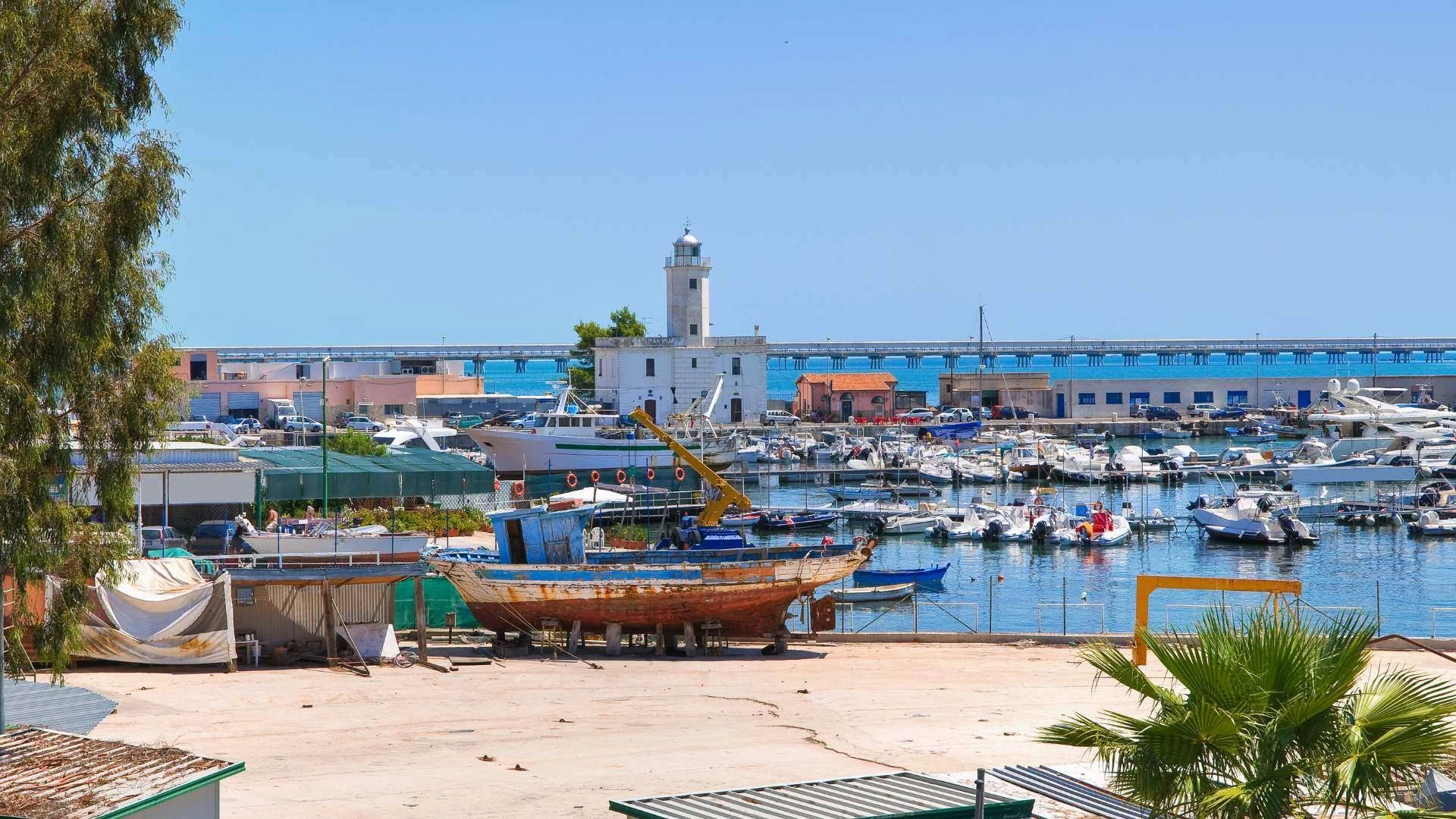
We are going to describe a day in Manfredonia as if you were living it. Not a tourist's day — waking at ten, app open, three sites to tick off the list. A real day, the kind where time disappears and the present moment is the only thing that counts. This is slow travel: not a lifestyle concept, but a way of being in the world that the Gargano teaches you, quietly, day by day, until you leave carrying something you cannot name but will miss.
Half past six in the morning: waking in the silence
You wake at Casa e Bottega at half past six. Not because an alarm called you — you switched it off on the second day — but because your body senses that something is different. The window of your room looks out over the terracotta rooftops of Manfredonia. The sun is already high, already warm, but the air still holds that six-o'clock freshness that lasts just one hour before yielding to the Gargano heat. You come downstairs slowly. You drink coffee in the kitchen, sitting at the wooden table. You notice how the light changes in the ten minutes you spend there. You do not usually notice things like that.
Half past seven: the fish market as ritual
You walk down to the harbour. Via del Porto is already awake: the fishing boats have been back for hours, the fish market is in full swing. The air smells of salt, diesel, fresh fish — not pleasant in any conventional sense, but real, an air that says this place exists, this place works. A fisherman with hands red from cold and salt is displaying octopus, sea bream, clams, sea urchins. He is not there for you. But if you approach with respect — without taking photos, without tourist questions — he will smile at you, and that is worth more than any souvenir.
Half past nine: coffee at the fishermen's bar
There is a bar near the quay where the fishing boats unload. No glowing sign, no Google Maps listing with four stars. The fishermen arrive after mending their nets, hands smelling of the sea. The bar serves strong espresso in white ceramic cups with a brown rim, homemade fried cornetti. Sit on a metal stool, drink without hurrying. Listen to the conversations around you — you may not understand everything, perhaps nothing, but the tone will tell you that you are in an authentic place.
Eleven o'clock: a walk through the historic centre
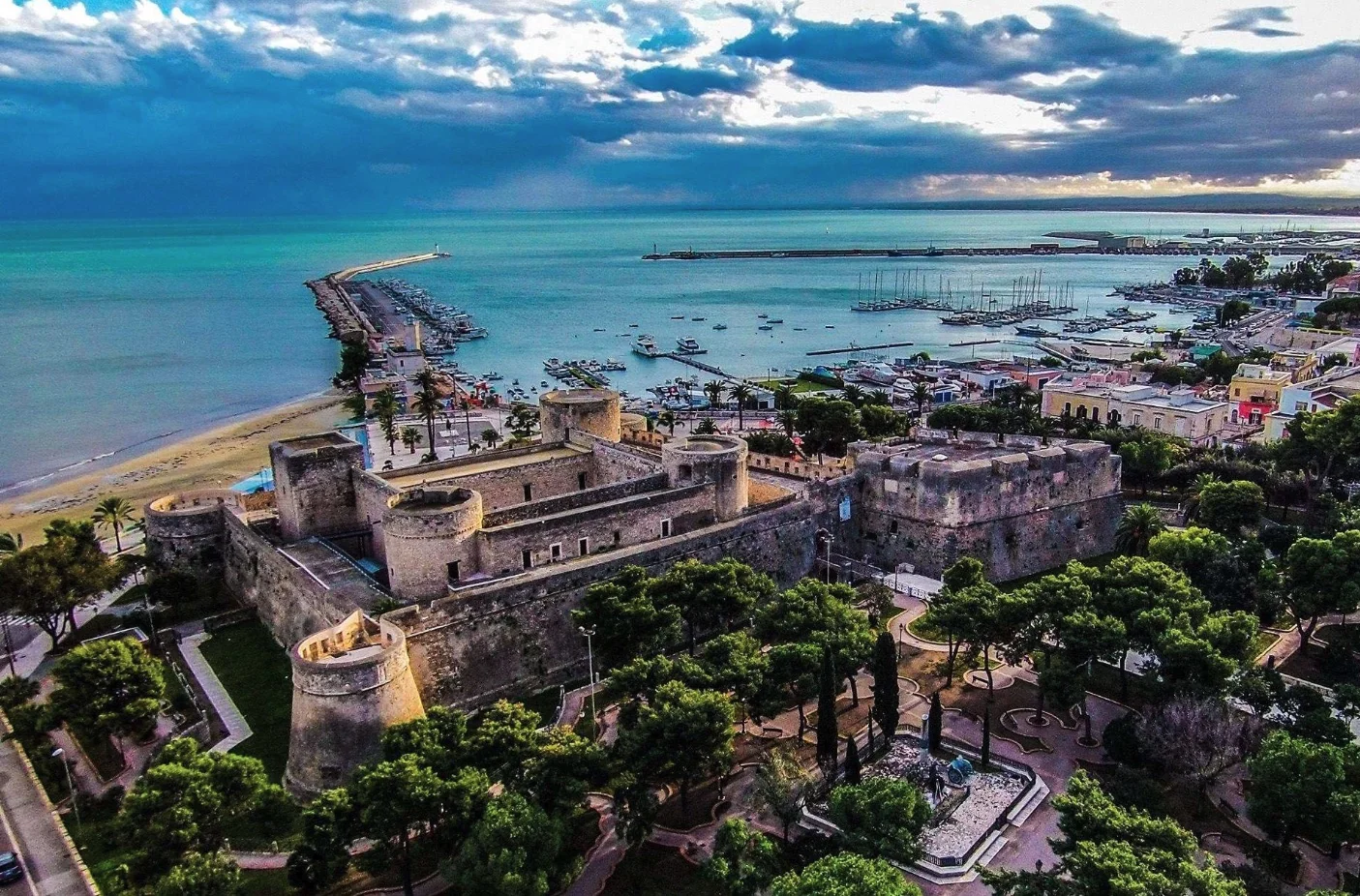
Walk towards the historic centre. Corso Manfredi is already alive: shops open, old men sitting on stone benches under the arcades. You pass the Angevin-Aragonese Castle, which faces the sea with the silent dignity of places that have seen everything and are no longer impressed by anything. Sit on a low wall on the seafront and look at the Gulf for twenty minutes without thinking about anything. This silence — the sound of the sea, the cry of seagulls, a radio playing in the distance — is the first gift Manfredonia gives you when you are awake early enough to receive it.
One o'clock: a slow lunch at a real trattoria
Eat orecchiette with octopus ragù at a trattoria in the centre where the woman cooking could be your mother, or your grandmother, or both at once. Lunch lasts two hours. A cool white Puglian wine that tastes of minerals and sun. Bread baked that morning, with a hard crust and a soft interior that soaks up the sauce. Homemade dessert — almond tart, or fried cartellate with vincotto, depending on the season. Then coffee and digestivo. Do not stand up before the coffee is finished. Staying is not rudeness: it is respect.
Three o'clock: the siesta that changes everything
Return to Casa e Bottega. Close the wooden shutters — those that filter the light into golden stripes on the floor. Sleep. This is not a comfort choice, it is a cultural one: a July afternoon in Manfredonia is hot as an oven. The city empties, shops pull down their shutters, cats stretch out in the shade. When you wake up, the light filters through the shutters in parallel lines. You do not wake tired: you wake reborn, with that rare feeling of having slept exactly as long as you needed to.
Five o'clock: a walk along the seafront
The seafront of Manfredonia is called Viale Beccarini. In the late afternoon it comes alive: mothers with prams, cyclists, old men playing cards outside bars. Sit at a table and order a cold water, an aperitivo, or nothing. Read the book you brought — or do not read it: the Gulf distracts you anyway. The sun starts moving westward and the light hitting the water changes colour every five minutes: from blinding white to silver, then gold, then an orange that seems impossible.
Seven o'clock: sunset from the pier
Walk to the harbour pier. The last stretch of quay where fishermen mend their nets is almost always empty. From here you see the sunset with nothing in front of you: only the sea, the silhouettes of the fishing boats, and the Gargano darkening behind you. No photograph does this sunset justice. You have to be there.
Ten o'clock: returning to Casa e Bottega
You return to your room. The streets of the historic centre at night smell of jasmine and bread baked on wood by some night baker. Inside yourself you know that what mattered was the silence, the time, the way Manfredonia taught you to keep still. Tomorrow you will do the same, more or less. The day after too. When you leave, you will carry with you the memory of how it is possible to spend an entire week without hurry, without lists to tick.
Why slow pace changes everything
Mass tourism teaches that the value of a holiday is measured in the number of places visited, photos taken, experiences ticked off. Slow travel — which Manfredonia practises without even knowing it, simply by being what it is — teaches the opposite: the value of a holiday is measured in what remains inside you when you get home. Not the memory of a landscape, but the feeling of having lived. Not the number of beaches visited, but the taste of that coffee at six in the morning beside the fishermen.
How to replicate this holiday: practical advice
How many nights: three is the minimum to feel the rhythm. Four or five is ideal. With fewer than three you experience Manfredonia as a stopover. What to book in advance: your room (Casa e Bottega has few places), a boat excursion if you want the coves, and a dinner at one of the harbour trattorias if you are here in August. What to leave to chance: everything else. Do not look for restaurants on TripAdvisor. Walk, watch where locals eat, go in. You will not ask for the menu: the woman cooking will tell you what there is. And if you are still weighing it up, we answered the question directly in is Manfredonia worth visiting.
Frequently asked questions
How many nights do you need to enjoy Manfredonia?
Three nights are the minimum to feel the city's rhythm. Four or five allow day trips to inland villages or a full day on a boat. With fewer than three nights you risk experiencing Manfredonia as a stopover, not a destination.
Is there nightlife in Manfredonia?
Manfredonia is not a city of nightclubs. The nightlife is the seafront promenade: bars open until midnight, ice-cream parlours, occasional live music. Those wanting a lively scene can head to Vieste. Those wanting a quiet evening will find the Manfredonia promenade perfect.
Is Manfredonia suitable for families?
Very much so. The sea near Manfredonia is shallow and calm, ideal for children. Casa e Bottega welcomes families and can provide a cot and high chair on request.
What is there to do in the evening in Manfredonia?
The walk along the seafront is the quintessential evening ritual. In summer there are often local festivals, concerts and street markets. The harbour bars are open late. Dinner at a trattoria in the historic centre easily lasts two hours — and should.
Is Manfredonia quiet in August?
August is the busiest month. The promenade gets crowded, but the historic centre keeps a different pace. For the slower Manfredonia, come in June or September: same beauty, fewer people, better prices.