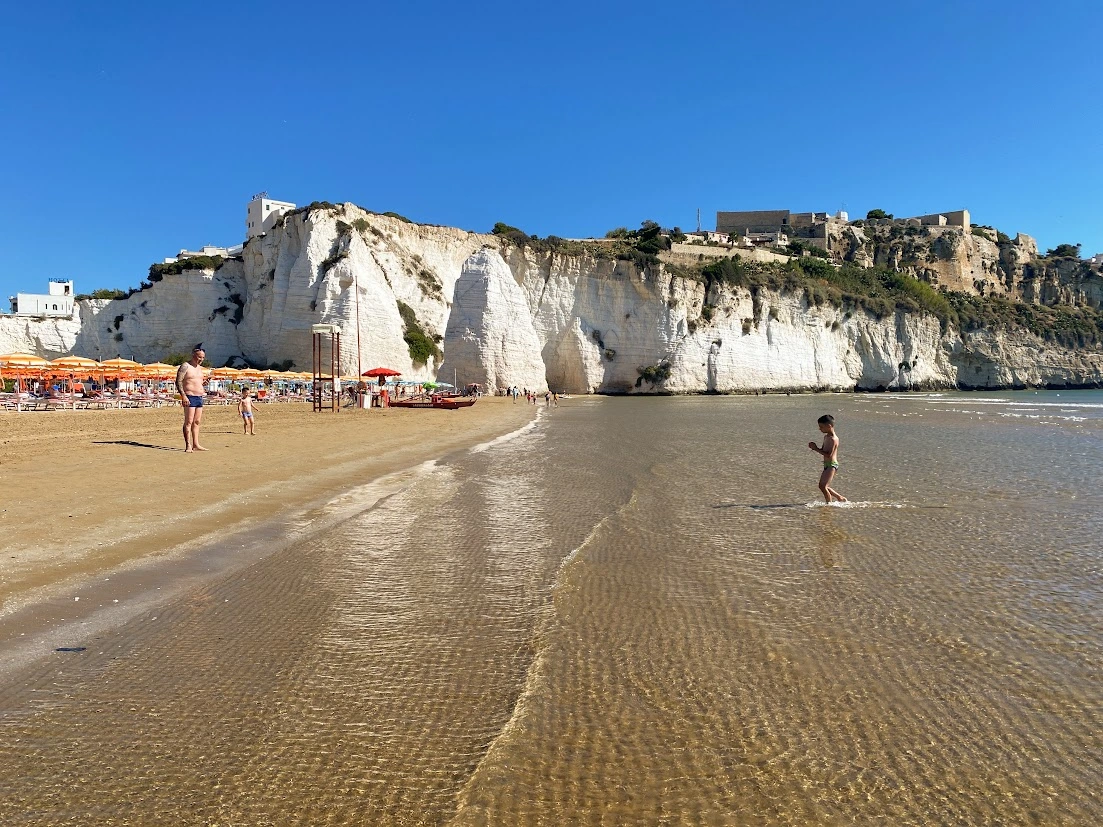
Vieste is 60 kilometres from Manfredonia, but it could be a different continent. A wedge of white limestone jutting into the Adriatic, with a medieval village perched on top and beaches descending on both sides. It's the easternmost town on mainland Puglia, the point where Italy seems to end — and something different begins.
A day trip from Manfredonia is perfectly easy: the SS89 coastal road is one of Italy's most beautiful drives, just over 50 minutes. But Vieste deserves more than an afternoon. This guide tells you what to see, how to get around, and why the Pizzomunno is much more than a rock.
The Pizzomunno and the legend of Cristalda
Arriving in Vieste from the sea, the first thing you see is the Pizzomunno, a 25-metre limestone spire rising from the water in front of the main beach. It's the symbol of Vieste, the sailors' landmark, the subject of thousands of photographs. But behind that rock is a story.
The legend tells of Pizzomunno, a young and handsome Vieste fisherman, in love with Cristalda, the most beautiful girl in the village. The Gargano's sirens fell in love with him and tried to lure him to the bottom of the sea. When Pizzomunno refused, the sirens kidnapped Cristalda and dragged her into the depths. His grief was so immense that Pizzomunno turned to stone on the shore, becoming the white rock that still watches over the beach today. Legend has it that every hundred years, for a single night, the two lovers meet again.
Whether you believe it or not doesn't matter. What matters is that standing in front of the Pizzomunno at sunset, with the light painting the rock orange, you understand that certain stones have a soul.
The trabucchi: Gargano's ancient fishing machines
Before exploring the alleyways, look down at the coast from above. You'll see wooden structures that look like giant spiders clinging to the cliffs: these are the trabucchi, ancient fishing machines unique to the Gargano. They're structures of Aleppo pine wood anchored to the rock, with long poles and nets lowered into the sea through a system of ropes and counterweights. The oldest date from the 17th century, probably introduced by the Phoenicians or Aragonese.
Today many trabucchi have become panoramic restaurants where you eat freshly caught fish while sitting literally above the sea. Book in advance: these are the most coveted spots on the Gargano coast. Some trabucchi between Vieste and Peschici are still working and open to visitors.
Sea caves: how to organise the boat trip
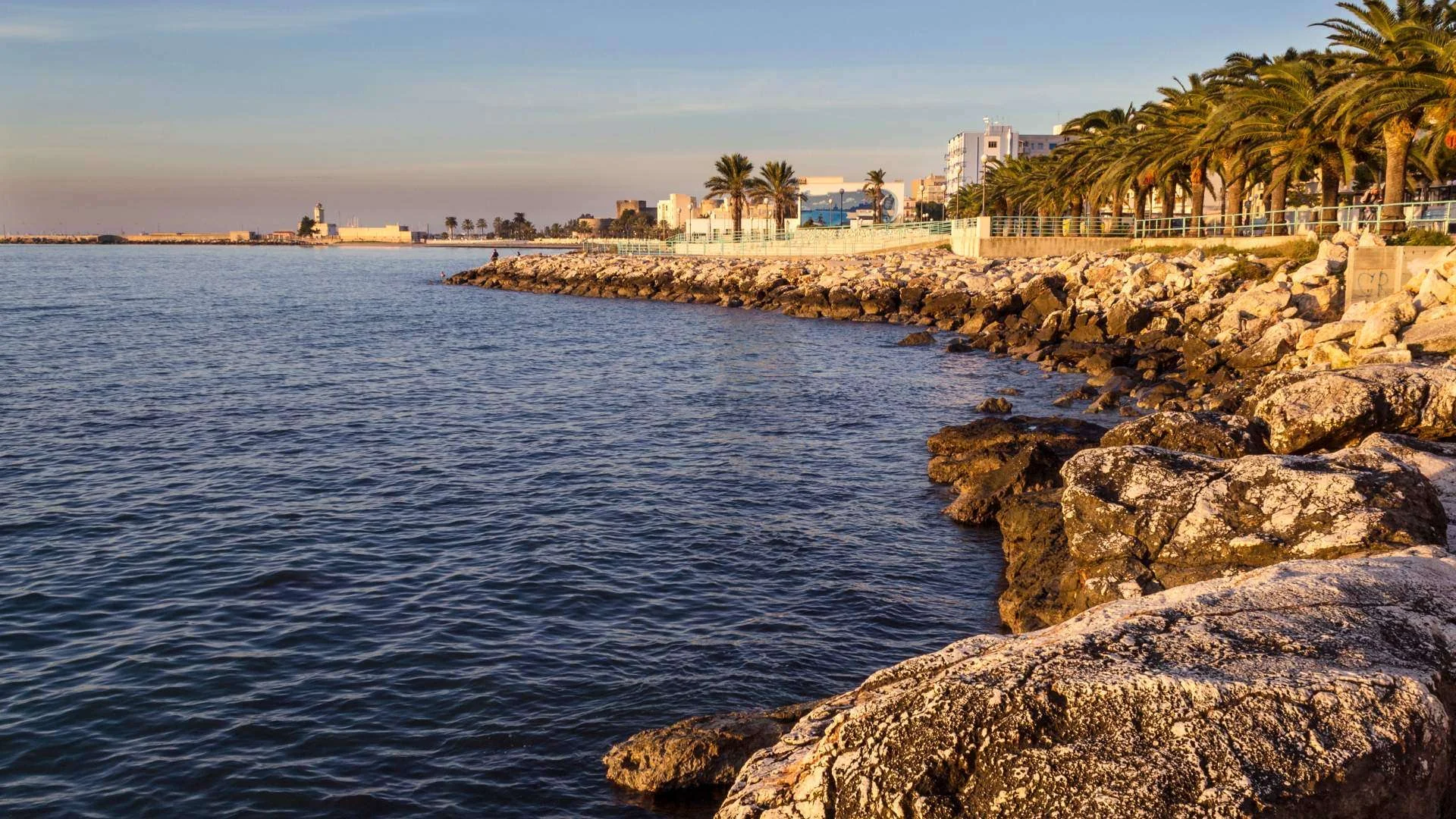
The coast between Vieste and Pugnochiuso is pockmarked with sea caves carved over millennia by limestone erosion. The most famous are the Grotta del Tesoro, the Grotta Sfondata and the Grotta dei Contrabbandieri. Some can only be reached from the sea, which makes them even more special.
Boat trips depart from Vieste harbour from May to September, with morning (9:00-10:00) and afternoon (15:00-16:00) departures. Duration is 2-3 hours. Cost is around €20-30 per person depending on the operator and season. No reservation is needed for group tours, but in July-August it's worth arriving at the harbour early. Bring goggles and a waterproof bag: you can snorkel in the caves and the water is cool even in summer.
The alleyways and the white labyrinth
Leave the car in the car parks at the entrance to the old town and walk. The old town of Vieste is a labyrinth of white alleyways — the caruggi — so narrow that in places two people pass sideways. Houses leaning against each other, outdoor staircases, potted flowers on windowsills, cats asleep on stone steps. The whitewashed walls reflect the sunlight blindingly: bring your sunglasses.
Getting lost is the point. Don't use Google Maps. Walk without a destination and let the town surprise you: a hidden terrace with a sea view, a ceramics workshop, a grandmother hanging laundry while singing. This is a Vieste that hasn't changed in five hundred years.
The Cathedral of Santa Maria Assunta
When you get lost in the alleyways (and you will), use the bell tower of the Cathedral of Santa Maria Assunta as your landmark. It's a Norman church built in 1097, rebuilt after the 1731 earthquake. The facade is sober, almost severe, but the interior catches a particular light in the afternoon when the sun enters through the side windows and illuminates the columns of local stone. Sit on the cathedral steps at sunset: it's one of Vieste's best spots to watch the sky.
Next to the cathedral you'll find the Chianca amara — a stone slab marking the memory of the massacre of five thousand Vieste inhabitants by the Ottoman corsair Dragut in 1554. The history of the Gargano includes this too.
The most beautiful beaches near Vieste
Vieste has two town beaches: Spiaggia di Pizzomunno (to the south) and Spiaggia del Castello (to the north, below the old town walls). Both are lovely and well-equipped, but fill up early in summer. The best beaches are outside the centre:
Baia di Vignanotica (15 km north of Vieste): accessible only on foot via a forest path of 30-40 minutes. Towering white cliffs, turquoise water, no beach clubs. The most beautiful beach on the Gargano coast.
Baia delle Zagare (20 km south): the two limestone sea stacks rising from the sea are among the Gargano's most iconic images. Reachable by boat or on foot via a challenging path. Arrive early in summer.
Cala San Felice (8 km north): a small cove with a natural rock arch, accessible via a short walk. Less well-known and less crowded.
How to get to Vieste from Manfredonia
By car on the SS89 Garganica: leave Manfredonia heading north and follow signs for Mattinata and Vieste. The road hugs the sea for much of the journey. In summer avoid peak hours (8:30-11:00 and 16:00-19:00) when the SS89 can get congested. The alternative route via Monte Sant'Angelo and the Umbra Forest is longer (80 km) but beautiful if you want to combine both in a day. For a detailed comparison of the two routes — timings, distances and which to pick — our guide on getting from Manfredonia to Vieste covers it in depth.
What to eat in Vieste
Vieste has an authentic seafood cuisine, not yet spoiled by mass tourism. Dishes not to miss: brodetto alla viestana (fish soup with tomato and chilli, cooked in terracotta), linguine with lobster, octopus stewed with olives and capers. For breakfast, look for fried panzerotti with ricotta and spinach in the bakeries of the old town: they are cheap and made fresh that morning.
The trabucchi converted into restaurants are atmospheric but tend to have high prices and variable quality. For good daily meals, look for the trattorias in the alleyways of the centre, away from the main promenade.
Frequently asked questions about Vieste
If you have more time, our 7-day Gargano itinerary will help you plan a full week from Manfredonia — beaches, villages, forests and the Tremiti Islands.
Is Vieste worth visiting?
Absolutely. Vieste is one of Italy's most beautiful coastal villages: the white old town perched on the headland, the Pizzomunno, crystal-clear beaches and the boat trip to the sea caves make it an unmissable stop on any Gargano visit.
How do you get to Vieste from Manfredonia?
By car on the SS89 Garganica heading north: about 60 km and 55 minutes of scenic coastal driving. In summer avoid peak hours. There is no direct train connection; Ferrovie del Gargano buses connect the two towns but take longer with limited schedules.
How long do you need to visit Vieste?
A full day is the minimum to see the old town, the Pizzomunno, spend time on a beach and possibly do the boat trip. Those wanting to explore at leisure can spend two days, including nearby beaches such as Vignanotica and Baia delle Zagare.
What are the most beautiful beaches near Vieste?
The best beaches near Vieste are: Baia di Vignanotica (wild, on foot only), Baia delle Zagare (famous sea stacks), Cala San Felice (natural rock arch cove) and Spiaggia del Castello (in town). The further from the centre, the more beautiful and unspoilt the beaches.
What is the Pizzomunno?
The Pizzomunno is a limestone spire about 25 metres tall that rises from the sea in front of Vieste's main beach. It is the town's symbol, linked to the legend of the fisherman Pizzomunno who was turned to stone by the sea gods after falling in love with the mermaid Cristalda. Legend says that every hundred years the two lovers meet for a single night.